Indian MOD: Both MMRCA Bids are Significantly Higher than Goal
According
to the Indian MOD’s ‘Year-end Review’, the final decision on the
winning bid for the Medium Multi-Role Combat Aircraft (MMRCA) is
expected within two weeks. Following the announcement MOD will negotiate
the final price. MoD sources indicate that the prices quoted by both
Eurofighter and Dassault are significantly higher than the US$8 billion
(42,000 crore) the Indian Cabinet cleared for the program. It is
estimated that both bids are in the $100 million per aircraft range. The
Gripen, MiG-35 and F-16 are believed to have met the Indian threshold.
Defense Update has learned the F-16 was offered at a $70 million and the
Super Hornet was offered ‘below $100 million per aircraft’; however,
all lost to the two European proposals which were the highest bids. The
US has recently offered the F-35 to Japan and Israel at around $120
million a piece.

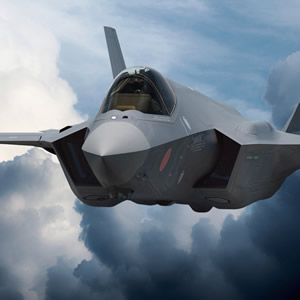
F-35J for Japan
December
20, 2011: Japan formally announced today the selection of the F-35 for
its future F-X fighter. The F-35 Lightning II multirole stealth fighter
built by Lockheed Martin will replace Japan’s aging fleet of F-4s, F-2s,
and F-15s. Japan’s leading aerospace industries Mitsubishi Heavy
Industries and IHI Corporation are expected to have a major role in the
production of the aircraft and its engine. Lockheed martin has indicated
to offer significant work share to local subcontractors. Japan has
considered three options for its F-X program – the Eurofighter Typhoon,
an enhanced version of the Boeing F/A-18E/F and the F-35A. The
government decision to acquire and field a fifth-generation stealth
fighter as soon as possible reflects Japan’s leadership strategy to
counter to the fifth-generation fighters being developed in China and
Russia while deterring the potential threat from unstable North Korea.
Japan’s decision may prove to be a deciding factor in South Korea’s
selection of its next air-superiority aircraft, with the F-35 becoming a
more viable and much stronger contender for the South Korean selection
of 60 fighters under the F-X phase 3.(Richard Dudley, Japan).

IAF Su-30 MKI
December
17, 2011: Despite recent the recent crash of a Su-30MKI, Indian Air
Force stands behind its first line strike fighter, increasing the
planned fleet to 272 aircraft. An order for 42 additional planes was
signed yesterday (December 16, 2011) in Moscow, by Defence Secretary
Shashi Kant Sharma and Russian Federal Service for Military-technical
Cooperation Director MA Dmitriev. India received the first of 120
Su-30MKI fighters in 1997. Follow-on orders have increased the number to
230. The new fighters will be the first newly upgraded models of the
Su-30 MKI, provided with upgraded radar, enhanced cockpit displays and
avionics, and designed to carry heavier loads, including the
air-launched version of the Brahmos supersonic air-to-surface missile. (Defense-Update)

Cheongung (MR-SAM) anti-aircraft missile from South Korea
December 17, 2011: The growing threat of missile attack by
North Korea has concerned Seoul for decades, but only recently defensive
systems are showing progress, with interceptor technology becoming
available on the domestic and world market. Last week the Agency for
Defense Development (ADD) of South Korea unveiled the Cheongung – a new
medium-range Surface to air Missile system designed to beef up the
country’s air and missile defense. (Defense-Update)
Stealth Infiltration Boats for South Korea
December
17, 2011: As part of its new proactive defense strategy Seoul is
pursuing new military capabilities that will enable its forces to
preempt or retaliate on any provocation from the North. Among those
means are special operations capabilities to be acquired by the Navy.
Seoul is allocating 900 billion ($700 million) to develop special boats
capability, enabling Navy Special Forces carrying the attack to the
enemy area. The navy will oversee the development of two types of
special stealth fast boats – one fir personnel infiltration and one
carrying logistical supplies in support of such forces.
Australia opts for the Spartan

Alenia/L3 C-27J Spartan
December 16, 2011: Australia has issued a letter of request to buy 10 Alenia C-27J Spartan
medium transport planes at a cost of US$950 million. These plates will
replace the 14 De Haviland Canada Caribou DHC-4 retired from service in
2009. The RAAF plans to phase out 12 C-130H transport aircraft, part of
which are replaced by new C-130J. Australia intends to buy the aircraft
from the U.S. via the Foreign Military Sales (FMS) program. The
Australians have also considered the Spanish made Airbus Military C295
aircraft but opted for the larger, more spacious tactical transport
plane that will be able to take some of the new Australian vehicles that
the C295 will not be able to carry. The C-27J is co-produced in the
U.S. by the L3 group which manufactures and supports the plane for the
U.S. Air Force.
December
16, 2011: Plan BeerSheba announced by the Australian Defence on
December 12, 2011 aims to ensure that the country continues to
contribute forces to operations including Afghanistan and successfully
transition to a force that is able to respond effectively to future
challenges, including humanitarian assistance and disaster relief and
other operations. The restructuring of the ground forces designed to
achieve a greater integration of the Regular Army and reserve component,
introduce amphibious operational capabilities of the Australian land
forces. (Defense-Update)
Russia to Deliver Leased Nuclear Submarine, Offers Conventional subs to India

Nerpa - to be renamed Chakra
December
16, 2011: Russia will lease its Nerpa nuclear submarine to India by the
end of 2011, the head of Russia’s federal agency in charge of military
and technical cooperation, Mikhail Dmitriyev, said on Friday. The
delivery will make India the sixth country to operate nuclear-powered
submarines, after France, China, Russia, Britain and the United States.
The $650 million lease contract for the Nerpa was signed in 2004. The
transfer was initially scheduled for 2008, but was put on hold following
a fatal accident in which 20 people died and two dozen others were
poisoned on board when the fire suppressant system accidentally released
freon gas. As it enters the Indian Navy service the submarine will be
renamed ‘Chakra’. For the longer term, Russia is also offering India the
Amur 1650 submarine, a Project 677 design attack submarine designed by
the Central design Bureau ‘Rubin’ in St Petersburg. The first submarine
of this design entered service with the Russian Navy in 2010. India has
released an international tender for license production of six
submarines to be powered by air-independent propulsion, giving the
submarine the capability to remain submerge for extended periods – up to
45 days, similar to a nuclear powered submarine. The submarine is
equipped with torpedoes, anti-ship missiles and anti ship/land attack
cruise missiles.
Navantia to Build 12 landing crafts for Australia

LCM-1E landing craft
December
15, 2011: Spanish shipbuilder Navantia has signed a contract to build
five blocks for the Australian Air warfare destroyer and for the
construction of 12 Landing Crafts LCM-1E, identical to those delivered
to the spanish navy between 2007-2008. The work for the Australian
projects, estimated at 350,000 man-hours, will dominate the workload for
the Bay of Cadiz over the coming years. (Defense-Update)

Australia is set to buy 1,300 Hawkei vehicles for A$1.5 billion
December
14, 2011: The Australian Defence has selected Hawkei light tactical
vehicle design from Thales Australia as the preferred design for LAND
121 Phase 4. Subject to successful testing of the vehicles, final
Government approval of the project is expected in 2015, and production
work could potentially commence in Australia as early as 2016. Part of
Project Overlander, the acquisition of 1,300 modern, protected light
tactical vehicles represent a $1.5 billion part of the $7.5 billion
project. The selection of an indigenous Australian design derails
previous plans to join the U.S. Joint Light Tactical Vehicle program,
which Australia has been part of in recent years. Australia has also
opted to buy 2,700 armored and unarmored medium trucks from Rheinmetall
MAN, to replace existing vehicles over the next decade. (Defense-Update)
Australia Beefs up Route Clearing Pathfinders
December
12, 2011: The Australian Defence department is sending four new route
clearing Bushmaster vehicles fitted with counter-IED mine rollers,
ground penetrating radar, robotic extension arms and armored excavators
to equip the Australian troops in Afghanistan better preparing them to
counter the IED threat and repair road damaged by such attacks. The
Australians have also beefed up the armor protection of existing
Bushmaster. In May 2011 an order for additional 101 Bushmasters was
awarded to Thales, which has also included the possible protection
enhancement. Following successful test conducted with the Bushmasters a
protection upgrade kit was developed, which includes changes to the
seats, and stronger welding for the hull, protecting against blast
effect. The enhancement is performed on the new production batch as well
as theose vehicles currently in operation in Afghanistan.
Thailand Minehunters to get the SeaFox

SeaFox - C photo: Atlas Elektronik
Decembet 8, 2011: Thailand has ordered the SeaFox minehunting system for
the Royal Thai Navy. The SeaFox is developed and produced by the German
company Atlas Elektronik which has already sold the system to nine
navies. Thailand will become the tenth operator of the system. The
company is expected to deliver three systems for evaluation and
training, to be followed by operational systems to equip the Royal Thai
Navy counter-mine vessels. The system comprises two types of vehicles,
the SeaFox I underwater surveillance vehicle used for target
identification and mine hunting , and the ‘mobile SeaFox’ (SeaFox C), an
expendable fiber-optic guided vehicle that autonomously guides itself
to predesignated targets, destroying sea mines by activating a large
shaped charge. The system can fit on any ship, with minimal
configuration.
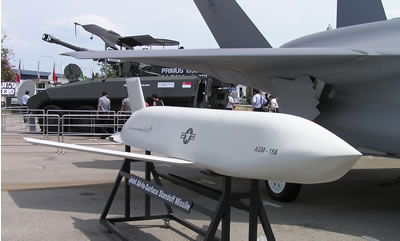
South Korea Favors JASSM for its U.S. made Fighters

AGM 158 JASSM
December
8, 2011: The republic of Korea plans has requested the U.S. to
authorize sale of 117 Joint Air-to-Surface Standoff Missile (JASSM) to
equip its F-15K Slam Eagle strike fighters and F-16K Falcons. The Korean
government allocated 388 billion won (equivalent to US$383) for the
missiles. Korea considered two alternatives for the stand off missile –
the JASSM from Lockheed Martin and the Taurus air-launched missile,
manufactured by Germany-based Taurus Systems GmbH.
Embraer Flies Indian Bound ERJ-145 AEW Aircraft
December 7, 2011: Brazilian aerospace company Embraer has flown the aircraft designed and built for the Indian Compact Airborne Early Warning
Aircraft developed by the Defense Research and development organization
(DRDO) Centre for Airborne Systems (CABS). The delivery of the first of
three aircraft is scheduled for the first half of 2012. The aircraft is
based on the proven ERJ-145 regional jet, modified with in-flight
refueling probe, satellite communications terminal, expanded power
supply and cooling resources.
Brunei Orders 12 S-80i Black Hawk Helicopters
December
7, 2011: The ministry of Defense of Brunei has signed with helicopter
manufacturer Sikorsky an order for 12 S-70i Black hawk helicopters, to
be delivered starting in 2013. The contract contains options for orders
of 10 additional helicopters. As part of the program Sikorsky will
provide simulator training for Burnei helicopter pilots, familiarizing
them with the new systems. The U-70i is the latest international version
of the Black hawk.
Indonesia to Expand Su-27/30 Fleet to a full Squadron
December
7, 2011: Indonesia plans to increase its Su-27/30 fleet to a full
squadron, flying 16 Su-27SK/SKM and Su-30MK/MK2 aircraft. The country is
negotiating with Russia the delivery of six Su-30MK2 fighters to be
configured into naval strike fighters. In addition, the Indonesia is
tightening its relations with the U.S., in anticipation to receive two
squadron of modernized F-16s by 2014. The aircraft are to be provided
from U.S. Air Force surplus as a grant by the a U.S. government, with
Indonesia paying for their restoration into flying status, system
modernization, upgrades and weapons, expected to cost about US$670
million.
First NH90 Delivered to New-Zealand
December 6,
2011: After two years delay, New Zealand received the first two of eight
NH90 helicopters ordered in 2006 were delivered by the manufacturer
NHI. The delivery of the helicopters was originally scheduled for 2009
but was delayed due to the software integration and certification
issues. In fact, the helicopters are not flightworthy yet, as some of
their software and mission computers are yet to be delivered. The NH90
will complement the five AgustaWestland AW-109 helicopters that also
arrived in 2011.
India Plans Doubling its Maritime Reconnaissance Fleet with 12 Additional P-8Is

P-8I made its first flight on September 26, 2011. Photo: Boeing
December
5, 2011: The Indian Navy will acquire 12 additional P-8I Long Range
Maritime Reconnaissance (LRMR) aircraft next year, tightening control of
Indian territorial waters and Economic Exclusion Zone (EEZ). The new
procurement will increase the Navy’s future P-8I fleet to 24. The Indian
Air Force is also planning to more than double its C-130J transport
fleet, acquiring nine additional planes from Lockheed Martin, according
to a letter of request submitted to washington.
Underwater Surveillance Vehicle for japan’s Coast Guard

the Canadian Explorer AUV from ISE
December
2, 2011: Japan Coast Guard (JCG) has ordered an Explorer autonomous
underwater vehicle (AUV) from the Canadian company International
Submarine Engineering Ltd. in British Columbia. The vehicle will be used
for marine search and recovery as well as survey operations. The AUV
will operate from a coast guard cutter to be equipped with a
light-weight self-articulating ramp enabling AUV launch and recovery
even in high sea state conditions. Explorer
is a modular vehicle that can be configured for commercial, scientific
or military customers. It can carry a wide range of sensors and has
endurance options ranging from 12 to 85 hours. The Explorer family of
AUVs was introduced in 2003 and follows previous ISE AUVs including ARCS
and Theseus.